Culture is revealed in what we fix first: the person, or the system.
Unlock Potential? Or Remove Barriers?
What Assistive Technology Teaches Us About Culture
December 23, 2025.
“Unlocking potential” is a phrase we use across various fields, including education, leadership, psychology, professional development, and more. It sounds generous and aspirational. It suggests that something valuable is inside each person, waiting for the right support, the right motivation, the right moment to emerge.
But in assistive technology, that framing collapses quickly.
When you work closely with people who depend on systems to access communication, movement, learning, or work, you see something clearly. Nothing is locked inside the person. What limits participation is almost always external. Tools that do not fit. Environments that move too fast. Expectations that demand performance before understanding. Systems designed for uniformity rather than difference. From an assistive technology perspective, this is not an individual problem. It is a cultural one.
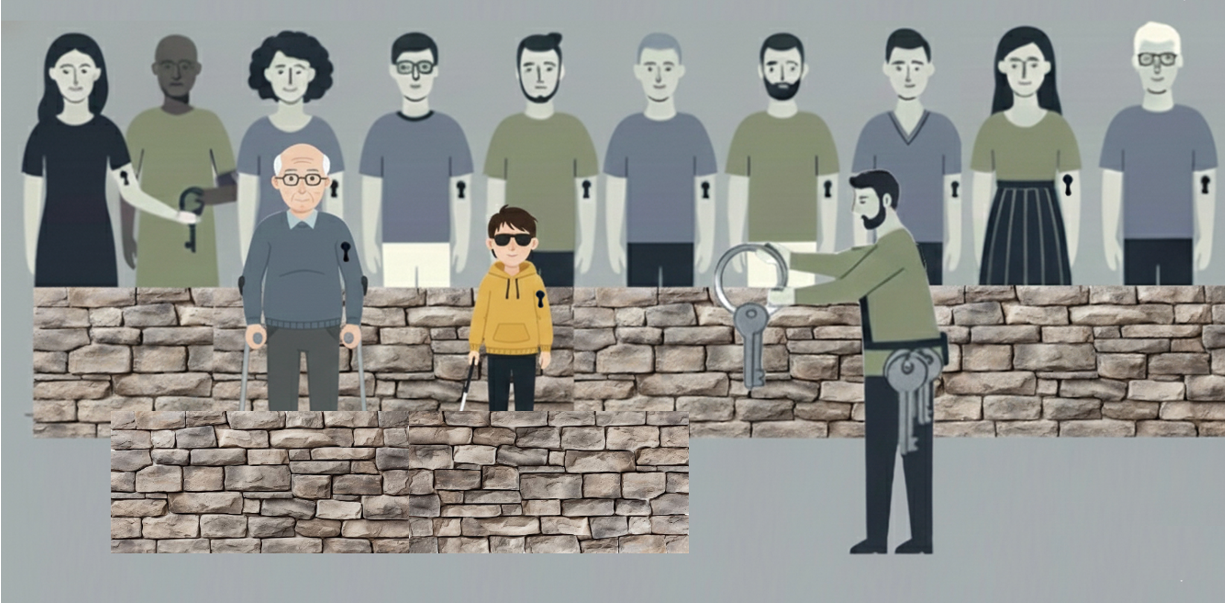
Across schools, workplaces, and institutions, two cultures quietly operate side by side. One treats growth as a matter of potential, something to be activated through effort, readiness, or grit. The other treats growth as a matter of access, something that emerges when conditions are right. The difference is not philosophical but practical. One culture asks people to adapt to systems as they are. The other asks systems to adapt to people as they are.
Assistive technology does not create ability. It reveals whether a system is willing to change. When access improves, nothing new appears in the person. What was always there becomes reachable. Communication happens. Participation expands. Agency becomes visible. Not because potential was unlocked, but because barriers were removed.
This distinction matters far beyond disability. The same pattern shows up in leadership programs that talk about unlocking talent while preserving exclusionary structures, in classrooms that reward compliance over understanding, and in workplaces that praise resilience instead of addressing burnout-inducing design. Unlocking potential often becomes a way to talk about growth without interrogating the conditions that constrain it.
Culture shows itself in what we fix first. Do we focus on the person, their motivation, their readiness, their capacity to cope? Or do we focus on the system, its design, its pace, its assumptions about what is normal and acceptable? Assistive technology professionals live at this fault line. Our work makes barriers visible, not only for people with disabilities, but for everyone.
So the question is not whether we believe in potential. The question is what kind of culture we are building. One that quietly asks people to overcome barriers on their own, or one that removes those barriers deliberately, collectively, and by design.
Assistive technology, at its best, does not unlock ability. It redistributes access by changing the conditions under which people can act, participate, and belong. This piece reflects field-based observation, and it is offered as an invitation to examine the cultures we build through the systems we design.